Kia EV3 Review: Price, Range, Specs & Real-World Truth
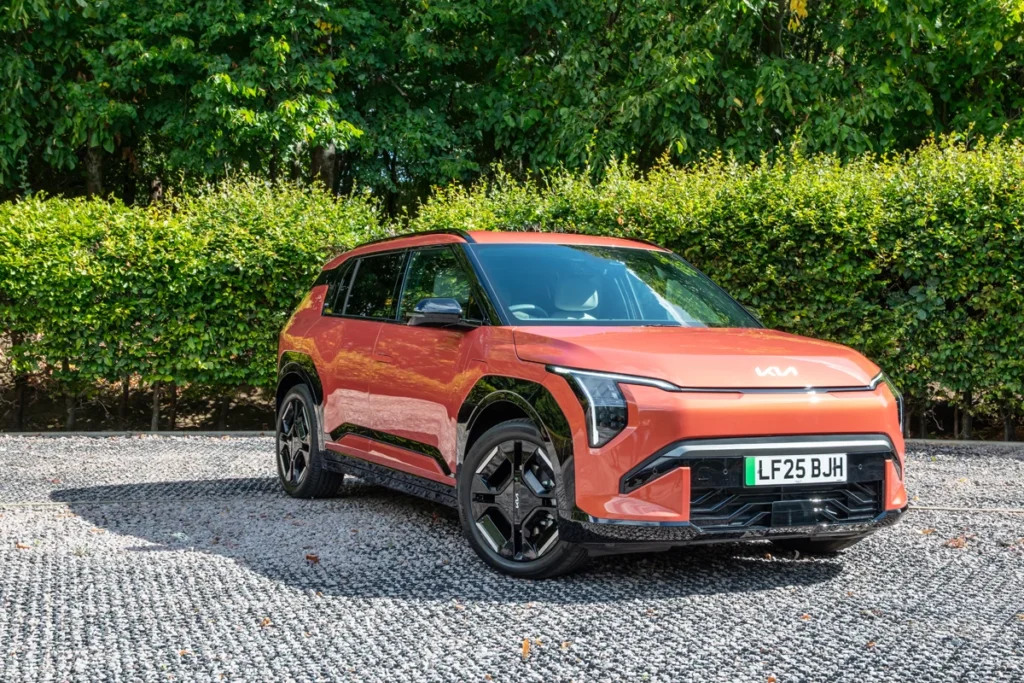
Kia has sold electric SUVs before, but nothing quite like this. The EV3 is the car meant to do what the EV6 and EV9 never could — get genuinely affordable, genuinely good electric motoring into driveways that aren’t already stocked with a six-figure income. It’s already on sale in Europe and Australia, it’s already picked up serious hardware from independent judges, and it’s now closing in on a U.S. launch that’s been talked about for two years. So what’s actually true here, and what’s just marketing noise? Let’s get into it.
What Exactly Is the Kia EV3?
Strip away the badges and the EV3 is a compact electric SUV, sitting below the EV6 and well below the three-row EV9, built on Kia’s E-GMP electric platform — the same underlying architecture that’s already proven itself in those bigger models. That matters more than it sounds like it should. Instead of Kia cutting corners to hit a lower price point, the Kia EV3 borrows real engineering from cars that already won awards, then shrinks it into a body that’s roughly 4.3 metres long.
What most articles gloss over is how deliberately Kia designed this car around two audiences at once. In Europe, it’s a genuine Volkswagen ID.3 and Cupra Born rival — boxy, upright, and clearly happy being a small hatchback-height SUV rather than pretending to be something bigger. In the U.S., where it’s arriving later and will likely wear “2027” badging despite the EV3 name, it’s being positioned as Kia’s answer to the price and range anxiety that’s kept a lot of shoppers out of the EV market entirely. Two battery packs — a 58.3kWh Standard Range and an 81.4kWh Long Range — cover both jobs.
Price and Range: What You’re Actually Getting
Here’s where the picture gets genuinely interesting, because the numbers differ a lot depending on where you live, and a lot of confusion online comes from people mixing up regions.
In the UK, where the EV3 has been on sale the longest, pricing starts at £32,995 for the Standard Range, which officially covers up to 267 miles on a charge. Step up to the Long Range with its bigger 81.4kWh battery and Kia claims up to 372 miles — a genuinely strong figure for a car this size and price. Both versions use a single front-mounted electric motor producing 204PS. In Australia, Kia EV3 pricing runs from roughly A$47,600 to A$66,490 depending on trim, which tells you how much local taxes and market positioning shift the sticker price even for the same car.
The U.S. picture is still unfolding. Kia has not confirmed official American pricing, but the working target circulating among dealers and industry analysts sits in the mid-$30,000s, with earlier talk of a $30,000 starting point looking optimistic once tariffs and the loss of the federal EV tax credit are factored in. American Standard Range models are expected to return a Kia-estimated 220 miles, while Long Range versions target roughly 320 miles — slightly more conservative than the UK’s WLTP-tested figures, which is normal given how EPA and WLTP testing methods differ. The base FWD motor makes 201 horsepower and 209 lb-ft of torque, with a 0–60 mph time around 7.5 seconds. Choose all-wheel drive and you get 261 horsepower, while the range-topping GT variant pushes to 288 horsepower and a noticeably quicker sprint, in the high 5-second range depending on the source.
What Kia Got Right — And What Reviewers Keep Flagging
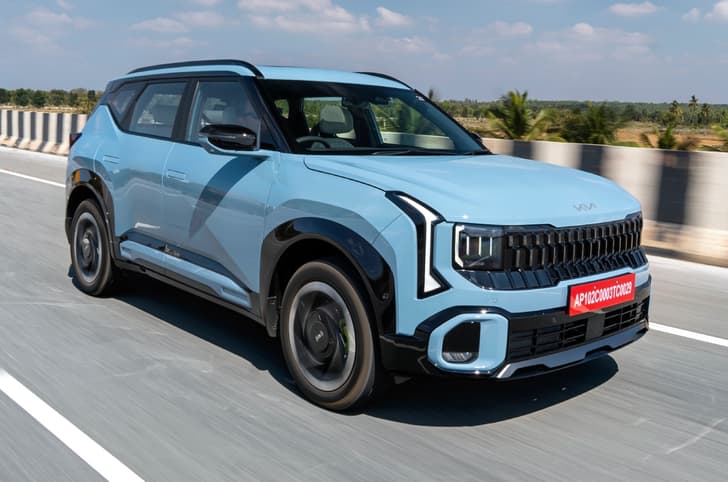
Every independent test drive so far lands on the same conclusion: this is a genuinely accomplished small EV, not a stripped-down budget compromise. Autocar named it Best Electric Car at its 2025 Awards, it took home the Best Small Crossover title at the 2025 UK Car of the Year Awards, and Electrifying.com handed it their own Car of the Year gong, praising it as a game-changer for families switching to electric without giving anything up. That’s not faint praise from any of those outlets.
The interior is where the Kia EV3 earns most of that goodwill. It borrows the EV9’s dashboard layout almost wholesale — a 12.3-inch digital driver display, a 5.3-inch climate touchscreen, and a 12.3-inch infotainment screen arranged in a continuous curve. On every trim above the base Air model, the front armrest slides open into a genuine laptop table, and Digital Key 2.0 lets you unlock and start the car from your phone. It’s the kind of thoughtful detail that costs Kia very little but changes how the car feels to actually live with day to day.
That said, this isn’t a flawless car, and honest reviews say so. Lower trims use noticeably hard, scratchy plastics that undercut the premium feel the exterior design promises, and the small climate control screen is oddly positioned where the steering wheel can block your view of it. Top-spec GT-Line models in some markets have been criticised for pricing that creeps close to $70,000 AUD while still missing features like a surround-view camera system — gear you’d expect standard at that price. DC fast charging tops out around 128kW, taking roughly 30 to 31 minutes to go from 10% to 80%, which is respectable but not class-leading against rivals that charge noticeably faster.
Kia EV3 vs. the Competition: How It Actually Stacks Up
The compact electric SUV segment is unusually crowded right now, and the EV3 has to fight on several fronts at once. Against its closest corporate cousin, the Hyundai Kona Electric, the EV3 wins comfortably on interior space, styling, and its triple-screen tech layout — the Kona simply feels a generation behind. Against the Volvo EX30, the comparison flips a little: the EX30 is quicker and has a more premium cabin finish, but the EV3’s Long Range model out-ranges it and offers noticeably more usable cargo space.
Versus the Volkswagen ID.3 and Cupra Born — its most direct size-for-size European rivals — the EV3 holds its own on practicality and pricing, even if the segment is genuinely split on drivetrain philosophy. VW and the wider Geely-owned brands lean toward rear-wheel drive, while Kia sticks with front-wheel drive across the EV3 range, matching Hyundai and Renault’s approach. Neither layout is objectively “better” — it comes down to whether you value the sportier handling character rear-drive typically offers, or the interior packaging benefits front-drive layouts tend to bring.
Safety, Warranty, and the 2026 Update Worth Knowing About
Euro NCAP tested the EV3 in 2024 and awarded it four stars rather than the full five — not because of poor crash protection (adult occupant protection scored a strong 83%, child occupant protection 84%) but because it lacked certain driver assistance features that newer five-star cars now carry as standard. That’s worth knowing if outright top-tier safety ratings matter to your decision, though the underlying occupant protection numbers are genuinely solid.
What’s actually new for 2026 is the U.S. launch itself finally taking shape. Kia formally unveiled the American-spec EV3 at the New York International Auto Show in April 2026, confirming five trim levels for that market — Light, Wind, Land, GT-Line, and GT — and reiterating a 10-year, 100,000-mile battery warranty that beats most rivals outright. Vehicle-to-load (V2L) capability also carries over from the EV6 and EV9, letting the EV3 power laptops, camping equipment, or small appliances directly from the battery. The car is expected to reach U.S. dealers in late summer or fall 2026, though Kia still hasn’t locked in final American pricing as of this writing.
Common Myths About the Kia EV3, Cleared Up
A lot of confusion floats around online, so let’s address it directly. No, the EV3 is not simply a rebadged Hyundai Kona Electric — while both share Hyundai Motor Group’s E-GMP underpinnings, the styling, interior architecture, and tuning are distinct enough that reviewers consistently rate the EV3 ahead of its cousin. No, it hasn’t been confirmed at a $30,000 starting price in the U.S. — that figure was an early aspirational target Kia mentioned years ago, and current estimates sit meaningfully higher once real-world costs are factored in. And no, this isn’t a “cheap” EV in the sense of feeling unfinished; the criticism aimed at it is about interior plastics on lower trims and value-for-money at the very top of the range, not about the car being poorly engineered.
Kia EV3 FAQ
Is the Kia EV3 available in the United States yet? Not yet. It’s expected to arrive in late summer or fall 2026, likely badged as a 2027 model, following its April 2026 reveal at the New York Auto Show.
How much does the Kia EV3 cost? It varies significantly by market. UK pricing starts at £32,995, Australian pricing runs from roughly A$47,600 to A$66,490, and U.S. pricing is expected in the mid-$30,000s, though Kia hasn’t confirmed an official figure.
What’s the real-world range of the Kia EV3? The UK-spec Long Range model is rated up to 372 miles under WLTP testing, while the U.S. Long Range version is targeting a more conservative Kia-estimated 320 miles. Expect real-world highway range to run 10–15% lower than either figure.
Does the Kia EV3 come with all-wheel drive? Yes, but only on the larger 81.4kWh Long Range battery, which unlocks a 261-horsepower AWD option and a 288-horsepower GT performance variant.
How fast does the Kia EV3 charge? On a suitable DC fast charger, it goes from 10% to roughly 80% in about 30 to 31 minutes, peaking around 128kW — solid, though not the fastest-charging car in its class.
Has the Kia EV3 won any awards? Yes. It picked up Best Electric Car at the 2025 Autocar Awards, Best Small Crossover at the 2025 UK Car of the Year Awards, and Electrifying.com’s Car of the Year title.
The Bottom Line
The Kia EV3 isn’t a perfect car, and reviewers have been refreshingly candid about where it falls short — cheaper plastics on base trims, a fiddly climate screen, and charging speeds that trail a few rivals. But strip away the nitpicks and what’s left is a compact SUV that delivers real range, a genuinely well-thought-out interior, and pricing that undercuts most of its direct competition without feeling like a compromise. For buyers who’ve been waiting for an EV that doesn’t demand a luxury budget, the EV3 is shaping up to be exactly that car — and once U.S. pricing is finally locked in, it’s likely to be one of the more talked-about electric SUVs of the year.